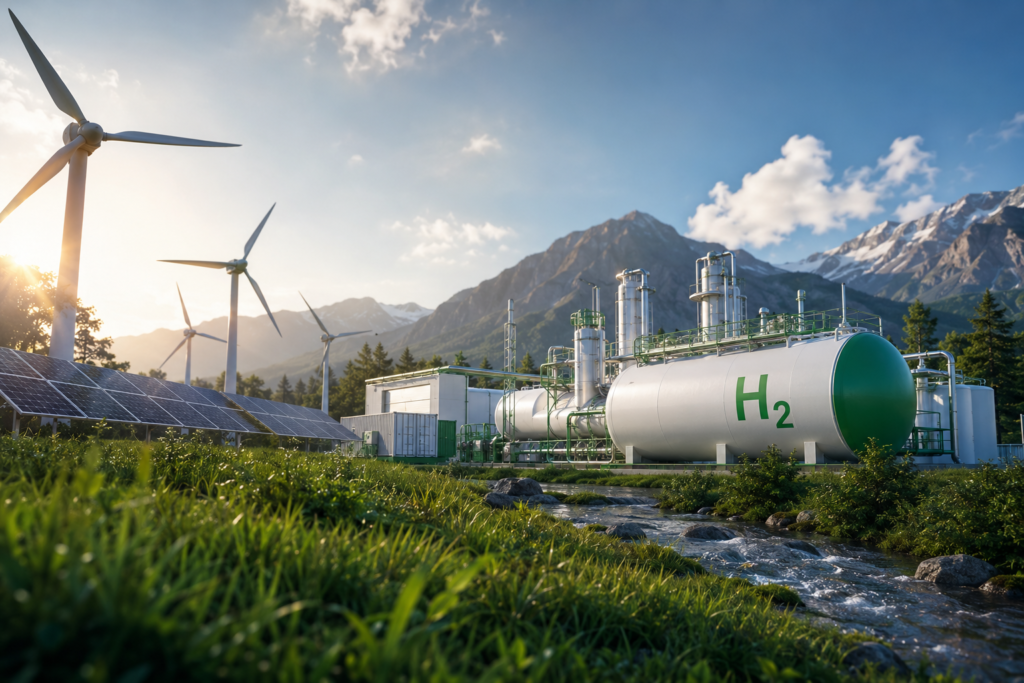
Green hydrogen is rapidly becoming one of the most promising clean energy sources available today. Produced using renewable energy sources such as solar and wind power, green hydrogen generates zero carbon emissions during production and use.
What is Green Hydrogen?
Hydrogen can be produced through various methods, but green hydrogen is generated through electrolysis powered by renewable electricity.
The process splits water into:
- Hydrogen
- Oxygen
without releasing carbon dioxide.

Why Green Hydrogen Matters
Decarbonization
Green hydrogen can replace fossil fuels in sectors where electrification is difficult.
Energy Storage
It serves as an efficient storage medium for renewable energy.
Industrial Applications
Can be used in:
- Steel manufacturing
- Fertilizer production
- Chemical processing
Components of a Green Hydrogen Plant
- Electrolyzer system
- Water treatment unit
- Hydrogen storage tanks
- Compression systems
- Renewable energy source
Major Applications
Transportation
Fuel-cell vehicles use hydrogen for clean mobility.
Industrial Heating
Provides high-temperature heat without emissions.
Power Generation
Hydrogen can be converted back into electricity when required.
Future Growth Potential
Many governments are investing billions in hydrogen infrastructure to support net-zero carbon goals.
Conclusion
Green hydrogen has the potential to revolutionize global energy systems by providing clean fuel, energy storage, and industrial decarbonization solutions.